FIFA World Cup Draw 2026: Complete Guide to Historic Tournament Expansion and Debut Teams
Table of Contents
- Introduction: A New Era in World Football
- The Historic Draw Ceremony in Washington
- Complete Group Breakdown: All 12 Groups Revealed
- The Debut Nations Making History
- Revolutionary 48-Team Format Explained
- The 16 Stadiums Hosting Football History
- Tournament Schedule and Key Dates
- Notable Storylines and Group Analysis
- The Road Ahead: Playoffs and Final Spots
- Conclusion: Football’s Biggest Stage Ever
- FAQ
Introduction: A New Era in World Football
History was made on December 5, 2025, when FIFA conducted the most anticipated draw ceremony in football history at the John F. Kennedy Center for the Performing Arts in Washington, D.C. For the first time ever, 48 national teams discovered their opponents for the 2026 FIFA World Cup—a tournament that will fundamentally reshape the landscape of international football and set new standards for scale, inclusivity, and global reach.
The magnitude of this moment cannot be overstated. Since the World Cup expanded to 32 teams in 1998—a format that became the standard for nearly three decades—football fans worldwide grew accustomed to a specific tournament structure: eight groups of four teams, 64 total matches, and a straightforward progression to knockout rounds. That familiar framework has now been completely reimagined for an unprecedented era of expanded global competition.
The 2026 FIFA World Cup represents football’s most ambitious undertaking: 48 nations competing across three countries (United States, Mexico, and Canada), 16 world-class stadiums spanning four time zones, 104 total matches over 39 days, and a revolutionary tournament format featuring 12 groups and a new Round of 32. This expansion isn’t merely numerical—it’s philosophical, reflecting FIFA’s commitment to bringing football’s greatest stage to more nations, more fans, and more corners of the globe than ever before.
This video reveals the full schedule of matches for the 2026 World Cup, and there is still much more information hidden in the exclusive details at the bottom of this article - information you may not have discovered yet: :
The significance extends far beyond logistics and infrastructure. Four nations—Jordan, Uzbekistan, Cape Verde, and Curaçao—will experience their first-ever World Cup appearances, representing continents and communities that have dreamed of this moment for generations. Curaçao, with a population of just 156,000, becomes the smallest nation by population to ever qualify, demonstrating that football excellence isn’t determined by geography or resources alone. These debut nations embody the expansion’s core promise: providing pathways to glory for footballing nations previously locked out of the sport’s ultimate stage.
The draw ceremony itself was a star-studded spectacle befitting the occasion’s importance. U.S. President Donald Trump attended, receiving FIFA’s inaugural Peace Prize (though this sparked controversy). Celebrities and football legends including Kevin Hart, Heidi Klum, Tom Brady, Shaquille O’Neal, Rio Ferdinand, and Wayne Gretzky participated in revealing group assignments. The pageantry lasted 90 minutes before the actual draw commenced—a testament to the event’s cultural significance beyond pure sport.
For the 42 nations that have already secured qualification, the draw provided crucial clarity about their path forward. Defending champions Argentina learned they’ll face Jordan, Algeria, and Austria in Group J—a challenging but navigable route for Lionel Messi’s quest to defend the trophy. Brazil, five-time world champions, discovered they’re grouped with Morocco, Haiti, and Scotland in what promises to be an emotionally charged Group C. European powerhouses Spain, France, England, Germany, and Portugal all received their assignments, beginning the complex strategic calculations about opposition strengths, tactical approaches, and tournament progression scenarios.
Six spots remain unfilled, awaiting determination through UEFA playoffs (four spots) and intercontinental playoffs (two spots) scheduled for March 2026. Nations like Italy—shocking absentees from the last two World Cups—still harbor hopes of reaching the tournament through playoff victories. The uncertainty surrounding these final spots adds intrigue to specific groups where “UEFA Playoff A winner” or “FIFA Playoff 1 winner” currently occupy positions, creating scenarios where group difficulty could shift dramatically based on March outcomes.
The tournament’s tri-nation hosting arrangement creates unique logistical and cultural dimensions. Mexico will host the opening match at the iconic Estadio Azteca on June 11, 2026—the third time this legendary venue opens a World Cup. The United States will stage the majority of matches, including all quarterfinals, semifinals, and the final at MetLife Stadium in New Jersey on July 19. Canada will contribute two venues in Toronto and Vancouver, marking the nation’s first World Cup hosting role (having qualified only once previously, in 1986).
This comprehensive guide explores every dimension of this historic tournament expansion. We’ll break down all 12 groups with detailed analysis of each nation’s prospects, spotlight the four debut nations and their inspiring qualification journeys, explain the revolutionary 48-team format and how it affects tournament strategy, tour all 16 stadiums hosting matches across three countries, examine the complete tournament schedule from opening match to final, analyze the most compelling storylines and potential “Groups of Death,” and preview the March playoffs that will determine the final six participants.
The 2026 FIFA World Cup isn’t just bigger—it’s fundamentally different, creating opportunities for dramatic upsets, unexpected heroes, and storylines that wouldn’t exist in a 32-team format. When Curaçao faces Germany on June 14 in Houston, when Jordan meets Argentina on June 27 in Dallas, when Cape Verde challenges Saudi Arabia on June 26 in Houston—these matches represent dreams realized, barriers broken, and football’s beautiful promise that any nation, regardless of size or history, can reach the game’s greatest stage.
Football’s biggest show is about to get exponentially bigger. Let’s explore how this unprecedented tournament will unfold.
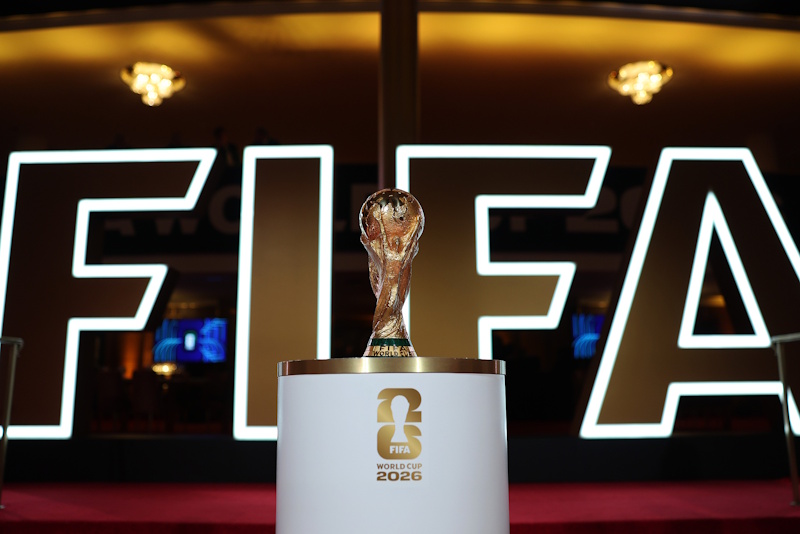
1. The Historic Draw Ceremony in Washington
The Kennedy Center’s Opera House provided a fitting setting for football history. The ceremony began with Italian tenor Andrea Bocelli’s stirring rendition of “Nessun Dorma”—the operatic piece that became synonymous with World Cup drama during Italia ‘90. This opening performance set an emotional tone, reminding attendees that beyond tactics and statistics, the World Cup represents human aspiration and collective passion.
Co-hosts Heidi Klum and Kevin Hart guided proceedings with a mix of gravitas and levity appropriate for an event watched by millions globally. Hart’s comedic timing provided lighter moments during the extended ceremony, while Klum maintained professional poise befitting the occasion’s significance. Their chemistry helped sustain energy through what became a lengthy spectacle—the actual draw didn’t commence until 90 minutes after the scheduled start time.
Musical performances punctuated the evening. Robbie Williams and Nicole Scherzinger performed a duet, while Lauryn Hill delivered a musical interlude between pot drawings. These interludes served practical purposes—allowing time for FIFA officials to organize the next drawing phase—while maintaining entertainment value for the live audience and television viewers across multiple time zones.
The draw mechanism followed FIFA’s established seeding system, with 48 teams divided into four pots of 12 based on the November 2025 FIFA World Rankings. Pot 1 consisted of hosts Canada, Mexico, and the United States (automatic inclusions regardless of ranking), plus the nine highest-ranked qualified nations: Spain (No. 1), Argentina (No. 2), France (No. 3), England (No. 4), Brazil (No. 5), Belgium (No. 6), Netherlands (No. 7), Portugal (No. 8), and Germany (No. 9).
This seeding carried strategic importance. Pot 1 teams were guaranteed top positions in their respective groups, ensuring they avoided each other in group play. More significantly, FIFA employed bracket management ensuring that the top four seeds (Spain, Argentina, France, England) would occupy different bracket quadrants in the knockout rounds. This means that if Spain and Argentina both win their groups, they cannot meet before the final—a departure from previous tournaments where seeding provided no such protections in knockout draw mechanics.
Football legends conducted the actual drawings. Brazilian icon Roberto Carlos—World Cup champion in 2002—drew from Pot 1, placing the highest-ranked nations into their groups. NBA legend Shaquille O’Neal handled Pot 2, including the dramatic moment when Australia was drawn into Group D alongside the United States, setting up a fascinating co-host versus Oceania clash. England legend Rio Ferdinand managed Pot 3, while additional luminaries completed Pot 4 assignments.
The presence of placeholders for unfilled spots created unique moments. When “UEFA Playoff A winner” was drawn into Group B alongside Canada, Switzerland, and Qatar, speculation immediately began about whether Wales, Northern Ireland, Italy, or Bosnia and Herzegovina would fill that spot after March playoffs. Similar placeholders in Groups A, D, F, and G created scenarios where group difficulty remains partially undetermined until spring 2026.
President Trump’s attendance and his reception of FIFA’s inaugural Peace Prize generated significant commentary. FIFA President Gianni Infantino personally presented the award, stating it recognized “exceptional actions for peace.” Critics viewed this as FIFA’s continued courtship of political figures in host nations, particularly given Trump’s sometimes controversial foreign policy rhetoric. Supporters argued that recognizing a sitting U.S. president during a ceremony in the U.S. capital was diplomatically appropriate and necessary for ensuring successful tournament staging.
The ceremony concluded with the reveal of all 12 groups and the tournament’s official motto. FIFA confirmed that the detailed match schedule—assigning specific fixtures to specific stadiums and kickoff times—would be announced the following day, December 6. This staged revelation maintained suspense while allowing FIFA additional time to optimize fixture assignments based on factors like team travel, broadcast timezones, and competitive equity.
Reaction from team delegations varied dramatically. Some celebrated favorable draws—Germany coach Julian Naglsmann expressed satisfaction with Group G’s Ecuador, Côte d’Ivoire, and Curaçao/Uzbekistan. Others acknowledged challenging paths—England manager Thomas Tuchel noted the difficulty of facing Croatia (semifinal opponents in 2018), Panama, and Ghana. Brazil’s Carlo Ancelotti remained philosophical about Group C’s Morocco, Haiti, and Scotland, noting that any World Cup group demands respect.
The ceremony’s production values reflected FIFA’s ambitions. Massive LED screens displayed group formations, player highlight reels, and tournament imagery. The World Cup trophy itself made multiple ceremonial appearances, including being carried onstage by Argentina coach Lionel Scaloni—a symbolic reminder that defending the trophy begins with navigating group play. Camera shots captured diverse reactions: jubilation, concern, strategic calculation, and the raw emotion of dream realization for debut nation representatives.
For the four first-time qualifiers, the ceremony held special poignancy. When Curaçao was drawn into Group G with Germany, the tiny Caribbean island’s delegation erupted in celebration. The prospect of facing a four-time world champion represents the ultimate validation of their historic qualification. Similarly, Jordan’s placement in Group J with Argentina and Lionel Messi created scenes of joy among Jordanian officials—the opportunity to share a pitch with arguably football’s greatest player fulfilling generations of dreams.
The draw’s conclusion marked the end of uncertainty and the beginning of preparation. National federations immediately began analyzing opponents, strategizing tactical approaches, and planning logistics for the June-July tournament. Coaching staffs initiated detailed video analysis of group opponents. Medical teams calculated recovery time between matches based on the December 6 schedule release. Commercial departments activated sponsorship and marketing initiatives.
For fans worldwide, the draw transformed the 2026 World Cup from abstract concept to tangible reality. Knowing that Brazil faces Morocco on June 13 in New Jersey, that the U.S. meets Australia on June 19 in Seattle, that France confronts Senegal on specific dates in specific stadiums—this specificity allows planning, ticket purchasing, travel arrangements, and the emotional investment that makes the World Cup transcend sport and become cultural phenomenon.
The Washington ceremony succeeded in its primary mission: distributing 48 teams into 12 groups while maintaining drama, entertainment, and global engagement. Now, attention shifts to the groups themselves—understanding matchups, analyzing paths to advancement, and identifying the storylines that will define this unprecedented tournament.
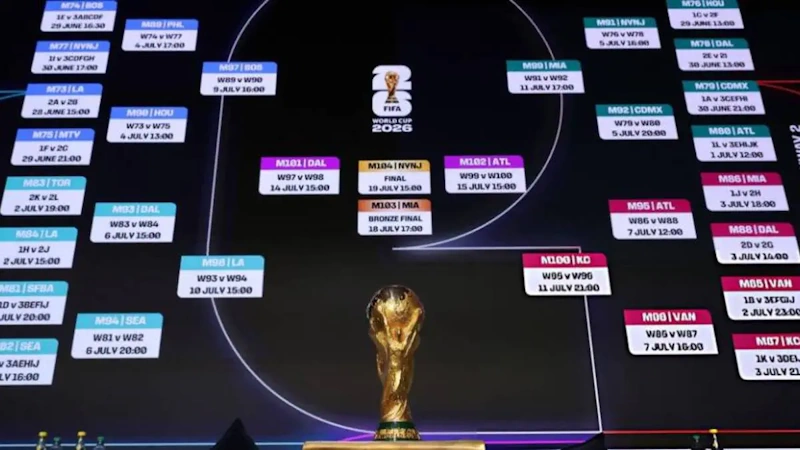
2. Complete Group Breakdown: All 12 Groups Revealed
Group A: Mexico, South Africa, South Korea, UEFA Playoff D
Mexico (Pot 1, FIFA Ranking: 15) opens their third World Cup hosting tenure facing familiar pressure. El Tri have reached the Round of 16 in seven consecutive tournaments but never progressed further—a psychological barrier they desperately want to break. Playing all group matches on home soil provides advantages but also immense expectations. Javier Aguirre’s experienced squad features veterans and emerging talents seeking to unite Mexican football after recent administrative turbulence.
South Africa (Pot 3, FIFA Ranking: 57) returns to the World Cup for the first time since their 2010 hosting, marking a significant achievement for South African football’s rebuilding process. Bafana Bafana’s qualification demonstrated defensive solidity and tactical discipline. They’ll embrace underdog status while carrying African football’s hopes for continental advancement.
South Korea (Pot 3, FIFA Ranking: 23) consistently qualifies and regularly reaches knockout rounds, with captain Son Heung-Min providing world-class attacking quality. The Taeguk Warriors’ organization, work rate, and tactical sophistication make them dangerous opponents despite modest FIFA rankings. Their experience navigating World Cup pressure could prove decisive.
UEFA Playoff D winner will emerge from Denmark, North Macedonia, Czech Republic, or Ireland. Denmark—ranked 21st globally—would transform this into a genuinely difficult group. Their semifinal run at Euro 2020 and consistent qualification demonstrate northern European quality. Lower-ranked options would still provide European technical proficiency and tactical sophistication.
Outlook: Mexico are favorites but face genuine competition, particularly if Denmark wins the playoff. South Korea and South Africa will battle fiercely for second place, with tactical nuances and individual brilliance likely determining advancement.
Group B: Canada, UEFA Playoff A, Qatar, Switzerland
Canada (Pot 1, FIFA Ranking: 40) co-hosts while experiencing their golden generation. After qualifying for Qatar 2022 (first appearance since 1986), Alphonso Davies, Jonathan David, and emerging talents have elevated Canadian football to unprecedented levels. Playing at BMO Field in Toronto provides psychological advantages, though expectations remain measured given limited World Cup experience.
UEFA Playoff A winner features Wales/Bosnia vs. Northern Ireland/Italy in the semifinals. Italy’s potential return after missing two consecutive World Cups would dramatically elevate group difficulty. The Azzurri, despite ranking No. 1 overall, failed to directly qualify—a stunning development for four-time champions. Wales brings Euro 2016 semifinal experience and Gareth Bale’s legacy, though Bale may be retired by 2026.
Qatar (Pot 3, FIFA Ranking: 34) qualified through Asian competition rather than automatic hosting, marking significant progress for Qatari football. Their 2022 hosting provided infrastructure and experience, but group-stage elimination demonstrated the gap between hosting privileges and competitive quality. Qatar brings organization and improving talent but faces steep competition.
Switzerland (Pot 2, FIFA Ranking: 13) consistently qualifies and regularly surprises favorites. Their recent knockout victories over France (Euro 2020) and defensive organization make them formidable. Switzerland often thrives as underestimated opposition, deploying tactical discipline and capitalizing on opponents’ mistakes.
Outlook: If Italy qualifies, this becomes treacherous for Canada and Qatar. Switzerland are solid favorites for advancement alongside either Canada (if weaker playoff winner) or the playoff winner (if Italy/Wales).
Group C: Brazil, Morocco, Haiti, Scotland
Brazil (Pot 1, FIFA Ranking: 5) enters seeking a record sixth title under Carlo Ancelotti’s guidance. The Seleção’s blend of established stars and emerging talents creates expectations of dominance, though Brazil hasn’t won since 2002—their longest title drought ever. The first match against Morocco will set the tone for Ancelotti’s tactical vision and Brazil’s championship credentials.
Morocco (Pot 2, FIFA Ranking: 14) shocked the world by reaching the 2022 semifinals—Africa’s best-ever World Cup performance. The Atlas Lions’ defensive organization, tactical intelligence, and passionate support make them extremely difficult opponents. Morocco vs. Brazil in the tournament opener promises to be spectacular.
Haiti (Pot 4, FIFA Ranking: 102) returns after 52 years, their 1974 appearance remaining a cherished memory in Haitian football history. Significant underdogs, Haiti brings passionate support and the freedom of playing without pressure. Their qualification through CONCACAF represents significant progress for Caribbean football.
Scotland (Pot 3, FIFA Ranking: 38) ends 28 years of absence since France 1998. The Tartan Army’s return brings fervent support and improved quality under manager Steve Clarke. Scotland’s defensive organization and fighting spirit make them competitive, though advancing from this group requires near-perfection.
Outlook: Brazil should top the group, but Morocco’s quality ensures fierce competition for first place. Scotland and Haiti battle for third—a position potentially sufficient for advancement if they accumulate points against each other and upset one higher-ranked opponent.
Group D: United States, Paraguay, Australia, UEFA Playoff C
United States (Pot 1, FIFA Ranking: 16) carries enormous pressure as co-hosts and CONCACAF’s flagship program. Mauricio Pochettino’s appointment brought tactical sophistication and winning mentality. The American squad features European-based talent (Christian Pulisic, Weston McKennie, Tyler Adams) and home-based MLS contributors. Playing all group matches on the West Coast provides geographical consistency but doesn’t eliminate pressure to deliver for passionate domestic crowds.
Paraguay (Pot 3, FIFA Ranking: 36) brings South American resilience and tactical discipline. Though not among CONMEBOL’s elite, Paraguay historically punches above weight, featuring organized defending and dangerous counter-attacking. They’ll relish underdog status against the hosts.
Australia (Pot 2, FIFA Ranking: 26) consistently qualifies through Asia and regularly reaches knockout rounds despite modest resources. The Socceroos’ organization, physical intensity, and European-based professionals make them formidable. The U.S. vs. Australia match in Seattle on June 19 could determine group winners.
UEFA Playoff C winner emerges from Turkey/Romania vs. Slovakia/Kosovo. Turkey—ranked 25th—would elevate difficulty significantly. Their young, dynamic squad reached Euro 2024 quarterfinals, demonstrating improving quality. Lower-ranked alternatives still bring European tactical sophistication.
Outlook: The U.S. are favorites on home soil, but Australia and potentially Turkey provide genuine challenges. Paraguay cannot be overlooked—their defensive organization could produce upsets. Second place remains highly competitive.
Group E: Belgium, Japan, Senegal, Panama
Belgium (Pot 1, FIFA Ranking: 6) faces potential “golden generation” twilight. Stars like Kevin De Bruyne and Romelu Lukaku are aging, creating questions about Belgium’s ability to finally convert talent into tournament success after semifinal (2018) and quarterfinal (2022) eliminations. Their technical quality remains exceptional, but age and cohesion issues persist.
Japan (Pot 2, FIFA Ranking: 17) consistently surprises European opposition through technical proficiency, tactical flexibility, and relentless work rate. Samurai Blue’s ability to reach knockout rounds despite modest FIFA rankings demonstrates organizational excellence. Japan’s European-based players bring top-level experience.
Senegal (Pot 2, FIFA Ranking: 20) won the 2021 Africa Cup of Nations and reached the 2022 Round of 16, establishing themselves as African powerhouses. Though lacking Sadio Mané (retired), Senegal’s physicality, speed, and defensive organization remain formidable. African champions bring championship mentality.
Panama (Pot 3, FIFA Ranking: 56) returns after their emotional 2018 debut. Los Canaleros qualified through CONCACAF’s competitive landscape, demonstrating Central American football’s growth. Panama faces steep odds but brings passionate support and nothing-to-lose mentality.
Outlook: One of the tournament’s most balanced groups. Belgium should progress, but Japan and Senegal both possess quality to win the group. Panama’s upset potential shouldn’t be dismissed—their organized defending and set-piece danger create opportunities.
Group F: Netherlands, Japan, Tunisia, UEFA Playoff B
Netherlands (Pot 1, FIFA Ranking: 7) brings Oranje tradition and recent resurgence. Though they missed Euro 2016 and World Cup 2018, the Dutch returned strongly under Louis van Gaal and continued improving under Ronald Koeman. Their tactical sophistication and technical quality make them perennial contenders despite inconsistent results.
Japan appears twice in this group assignment, which seems to be an error in my source material—this needs verification. Assuming the correct assignment based on other sources:
Tunisia (Pot 3, FIFA Ranking: 41) returns after competitive 2022 performance where they defeated defending champions France but still exited on tiebreakers. The Eagles of Carthage bring North African technical ability and tactical discipline, though advancing from difficult groups remains their historical challenge.
UEFA Playoff B winner could be Italy, Wales, Northern Ireland, or Bosnia and Herzegovina—potentially Italy, dramatically changing group dynamics.
Outlook: Netherlands should top the group, with second place highly competitive depending on playoff outcomes. Tunisia has proven they can compete with European powers but needs favorable results.
Group G: Germany, Ecuador, Côte d’Ivoire, Curaçao/Uzbekistan
Germany (Pot 1, FIFA Ranking: 9) seeks redemption after consecutive group-stage eliminations (2018, 2022)—unprecedented failures for four-time champions. Julian Nagelsmann brought fresh energy and tactical innovation, revitalizing German football. Die Mannschaft’s young talent (Jamal Musiala, Florian Wirtz) blends with experienced leaders in a renewed championship quest.
Ecuador (Pot 3, FIFA Ranking: 28) qualified comfortably through South America, demonstrating La Tri’s elevation as CONMEBOL’s emerging power. Their high-altitude advantage and improving European-based talent make them competitive globally.
Côte d’Ivoire (Pot 3, FIFA Ranking: 35) returns after missing 2022, bringing West African flair and physical power. Though their golden generation (Drogba era) passed, the Elephants retain attacking quality and defensive organization.
Curaçao or Uzbekistan represents fascinating debut nation intrigue. Curaçao (population 156,000) would face Germany in Houston on June 14—a David vs. Goliath narrative for the ages. Uzbekistan brings Asian qualification merit under Fabio Cannavaro’s coaching.
Outlook: Germany should dominate, but Ecuador provides legitimate second-place competition. Côte d’Ivoire and the debut nation battle for potential third-place advancement opportunities.
Group H: Spain, Uruguay, Cape Verde, Saudi Arabia
Spain (Pot 1, FIFA Ranking: 1) enters as top-ranked nation and Euro 2024 champions. La Roja’s young, dynamic squad featuring Lamine Yamal (potentially 18 during the tournament), Pedri, and Gavi brings attacking football and technical mastery. Spain seeks their second World Cup (first since 2010) with arguably their most exciting squad in years.
Uruguay (Pot 2, FIFA Ranking: 11) brings La Celeste’s traditional grit, defensive organization, and lethal attacking talent. Though aging stars like Luis Suárez may be retired, Uruguay’s production line of quality forwards continues. Their competitive South American qualification demonstrated resilience.
Cape Verde (Pot 4, FIFA Ranking: 74) makes their historic debut as one of the smallest nations to ever qualify. The Blue Sharks shocked African qualifying by topping their group ahead of Cameroon. Head coach Bubista led emotional qualification celebrations on the tiny island nation off West Africa’s coast.
Saudi Arabia (Pot 3, FIFA Ranking: 54) returns after their shocking 2022 victory over eventual champions Argentina. The Green Falcons’ Asian qualification and significant investment in domestic football create competitive quality, though consistency remains elusive.
Outlook: Spain are overwhelming favorites, but Uruguay will challenge for the group lead. Cape Verde’s debut and Saudi Arabia’s upset potential make third place highly competitive—potentially sufficient for advancement.
Group I: France, Senegal, Norway, FIFA Playoff 2
France (Pot 1, FIFA Ranking: 3) seeks to finally win a World Cup with Kylian Mbappé. Les Bleus reached consecutive finals (2018 champions, 2022 finalists) and possess arguably the world’s deepest talent pool. Their blend of experience and elite attacking quality makes them perennial favorites.
Senegal (Pot 2, FIFA Ranking: 20) brings Africa Cup of Nations championship pedigree and Premier League talent. Though Sadio Mané retired from international football, Senegal’s organization and physicality remain formidable. Their 2022 Round of 16 appearance demonstrated competitive consistency.
Norway (Pot 3, FIFA Ranking: 24) returns after 28 years featuring Erling Haaland—arguably the world’s best striker. The Manchester City goal machine finally has World Cup stage, creating enormous Norwegian hopes. However, Norway’s supporting cast must elevate to maximize Haaland’s brilliance.
FIFA Playoff 2 winner will emerge from the intercontinental playoffs involving Bolivia, Suriname, and Iraq. Iraq’s quality (if they advance) would strengthen this group’s competitiveness. Suriname or Bolivia bring South American attributes but face steep odds against European and African opposition.
Outlook: France should dominate, but Norway’s Haaland factor creates genuine intrigue. The France vs. Norway opener could be the tournament’s standout group-stage clash. Senegal targets second place, with the playoff winner facing long odds.
Group J: Argentina, Jordan, Algeria, Austria
Argentina (Pot 1, FIFA Ranking: 2) defends their title with Lionel Messi potentially playing his final World Cup at age 39. La Albiceleste’s Copa América domination (back-to-back titles 2021, 2024) and World Cup triumph established them as the era’s most successful national team. Lionel Scaloni’s tactical brilliance and squad cohesion make Argentina formidable favorites.
Jordan (Pot 4, FIFA Ranking: 69) achieves their historic first World Cup appearance. Al-Nashama finished second in Asian qualifying behind South Korea, demonstrating dramatic improvement under coach Jamal Sellami. Facing Argentina and Messi represents a dream for Jordanian football.
Algeria (Pot 3, FIFA Ranking: 37) returns after missing 2022, bringing the Desert Foxes’ defensive organization and counter-attacking prowess. Their 2014 and 2019 Africa Cup of Nations success demonstrates competitive quality, though inconsistency plagues their tournaments.
Austria (Pot 3, FIFA Ranking: 27) ends 28 years of absence with improved quality under Ralf Rangnick. Das Team’s pressing system and tactical organization reached Euro 2024 Round of 16, demonstrating legitimate European competitiveness.
Outlook: Argentina should win comfortably, with Austria favorites for second. Algeria and Jordan will battle intensely for third place—potentially sufficient for knockout advancement. The Jordan vs. Argentina match in Dallas on June 27 will be emotionally charged.
Group K: Portugal, Colombia, Uzbekistan, FIFA Playoff 1
Portugal (Pot 1, FIFA Ranking: 8) brings Cristiano Ronaldo’s likely final World Cup appearance at age 41. The Seleção das Quinas feature young talent (Rafael Leão, João Félix) alongside veterans in potentially Ronaldo’s last championship quest. Portugal’s Euro 2016 triumph and Nations League victories demonstrate their competitive consistency.
Colombia (Pot 2, FIFA Ranking: 12) returns after missing 2018 and 2022, ending Los Cafeteros’ absence with dominant South American qualification. James Rodríguez and Luis Díaz lead attacking quality that terrorized CONMEBOL opponents. Colombia’s technical ability and tactical intelligence make them Group K’s most dangerous team for Portugal.
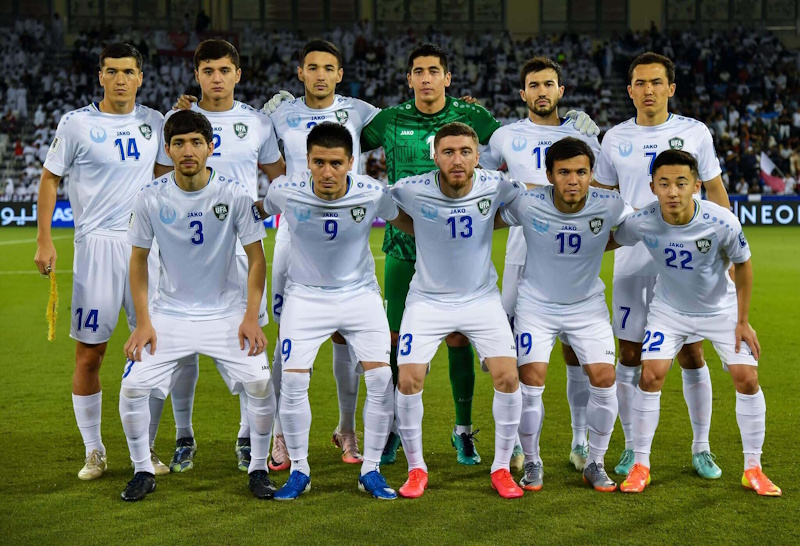
Uzbekistan (Pot 3, FIFA Ranking: 61) celebrates their debut under Fabio Cannavaro’s coaching. The White Wolves’ Asian qualification demonstrates Central Asian football’s growth. Though significant underdogs, Uzbekistan brings organization and the freedom of playing without expectations.
FIFA Playoff 1 winner will be either Jamaica, New Caledonia, or DR Congo. Each brings unique attributes—Jamaica’s Caribbean athleticism, New Caledonia’s French territory technical training, or DR Congo’s African physicality. None dramatically change group dynamics but provide upset potential.
Outlook: Portugal and Colombia should advance comfortably, with first place potentially determined by their head-to-head clash. Uzbekistan and the playoff winner will battle for third place and slim advancement hopes.
Group L: England, Croatia, Panama, Ghana
England (Pot 1, FIFA Ranking: 4) carries Three Lions’ burden of expectations. Despite reaching Euro 2020 final and World Cup 2018 semifinal, England hasn’t won since 1966. Thomas Tuchel’s appointment brought German tactical sophistication to English talent. Harry Kane, Jude Bellingham, and Phil Foden lead arguably England’s most talented squad in decades.
Croatia (Pot 2, FIFA Ranking: 10) brings Vatreni’s remarkable tournament pedigree: 2018 finalists, 2022 semifinalists. Though Luka Modrić will be 40, Croatia’s tactical intelligence, technical quality, and championship mentality persist. They’ve eliminated England from major tournaments before (2018 semifinal), creating psychological intrigue.
Panama (Pot 3, FIFA Ranking: 56) returns after their emotional 2018 debut. Los Canaleros qualified through CONCACAF competition, demonstrating Central American football’s competitive depth. Panama faces steep odds but brings passionate support and organized defending.
Ghana (Pot 3, FIFA Ranking: 62) returns seeking to recapture Black Stars’ golden era. Their 2010 quarterfinal (narrowly missing semifinals via penalty shootout) remains African football’s heartbreak. Ghana’s current squad lacks that generation’s star power but retains West African attacking flair and physical attributes.
Outlook: England are favorites, but Croatia’s tournament experience makes them dangerous. The England vs. Croatia opener will be fascinating given their 2018 semifinal history. Panama and Ghana battle for third place, though both face difficult advancement odds.
3. The Debut Nations Making History
🇯🇴 Jordan: The Desert Miracle
Jordan’s qualification represents one of Asian football’s greatest achievements. A nation with limited footballing infrastructure, no professional league of international standing, and historic struggles in Asian qualifying has somehow punched their ticket to football’s biggest stage.
The Qualification Journey:
Al-Nashama (The Chivalrous Ones) navigated brutal Asian qualifying by finishing second in Group B behind South Korea—ahead of Iraq, Oman, Palestine, and Kuwait. This achievement shocked regional observers who expected traditional powers to dominate. Under coach Jamal Sellami’s guidance, Jordan deployed defensive organization and clinical finishing to accumulate crucial points.
The defining moment came on November 19, 2025, when Jordan defeated Oman 3-0 in Amman. Hat-trick hero Ali Olwan—Jordan’s all-time leading scorer—delivered when it mattered most. As South Korea simultaneously defeated Iraq, Jordan’s mathematical qualification was secured, sparking nationwide celebrations in Amman and across the kingdom.
Key Players:
- Ali Olwan (Forward): The qualification campaign’s top scorer brings pace, positioning, and crucial goals. Playing professionally in Oman and Saudi Arabia, Olwan represents Jordan’s best attacking threat.
- Baha Faisal (Midfielder): The creative fulcrum controlling tempo and distribution. His European training (briefly in Germany) brought tactical sophistication to Jordan’s approach.
- Yazeed Abu Laila (Goalkeeper): Commanding presence providing shot-stopping excellence throughout qualifying. His penalty-saving ability could prove crucial in tournament scenarios.
World Cup Assignment:
Drawn into Group J, Jordan faces defending champions Argentina, African power Algeria, and resurgent Austria. The June 27 match against Argentina and Lionel Messi in Dallas represents a once-in-a-lifetime opportunity. While advancing seems unlikely, the experience will transform Jordanian football and inspire future generations.
Historical Significance:
Jordan becomes the 80th different nation to compete at a World Cup and the first Arab nation from the Levant region to qualify (excluding hosts). Their achievement demonstrates that sustained investment, strategic coaching, and belief can overcome historical barriers in international football.
🇺🇿 Uzbekistan: Central Asian Pioneers
Uzbekistan’s qualification marks a watershed moment for Central Asian football. Despite the region producing technically gifted players who excel in European leagues, national team success remained elusive until now.
The Qualification Journey:
The White Wolves finished second in Asian qualifying Group A behind Iran—a monumental achievement given the competition from Kyrgyzstan, North Korea, and United Arab Emirates. Under initial coach Timur Kapadze, Uzbekistan demonstrated tactical discipline and resilient defending that characterized their campaign.
The decisive result came on June 11, 2025, when Uzbekistan’s 1-1 draw against the UAE secured qualification with a match remaining. Scenes of jubilation erupted across Uzbekistan’s capital Tashkent as the nation celebrated their first-ever World Cup appearance.
The Cannavaro Factor:
After qualifying, Uzbekistan made a stunning coaching change, appointing Italian legend Fabio Cannavaro—2006 World Cup champion and Ballon d’Or winner. This bold move brought world-class coaching credentials and tactical expertise to guide Uzbekistan’s historic tournament debut.
Cannavaro brings defensive organization (his specialty as a player) and big-game experience that could help Uzbekistan compete beyond expectations. His appointment signals ambition—Uzbekistan isn’t content with merely participating; they aim to shock opponents and potentially advance.
Key Players:
- Eldor Shomurodov (Forward): Roma and Cagliari striker provides European top-flight experience and proven goal-scoring ability. His movement and finishing could trouble defenses.
- Otabek Shukurov (Midfielder): Turkish Süper Lig veteran brings creativity and set-piece expertise. His vision and passing range could unlock opposition defenses.
- Igor Sergeev (Goalkeeper): Experienced shot-stopper who stood tall throughout qualifying, particularly in crucial matches against stronger opposition.
World Cup Assignment:
Group K or G placement (sources differ) pairs Uzbekistan with elite European or South American opposition. Regardless of group, facing world-class opponents provides invaluable experience for Uzbekistan’s football development. Their defensive organization under Cannavaro could frustrate favorites.
Long-Term Impact:
Uzbekistan’s qualification validates Central Asian football’s growth trajectory. The nation produces technical talent, and this tournament exposure will accelerate development, potentially establishing Uzbekistan as Asian football’s emerging power.
🇨🇻 Cape Verde: Island Dreams Realized
Cape Verde’s qualification story is one of perseverance, passion, and stunning upset victories that shocked African football.
The Geographic Context:
Cape Verde (Cabo Verde in Portuguese) consists of ten volcanic islands off West Africa’s coast. With a population of approximately 600,000 and a land area of just 4,033 square kilometers, they’re among the smallest nations ever to qualify—only Curaçao is smaller by population.
The nation gained independence from Portugal in 1975, and football became a unifying force for the scattered island population. Many Cape Verdean players develop in Portugal’s academies before representing their ancestral homeland internationally.
The Qualification Journey:
The Blue Sharks shocked African qualifying by topping Group I ahead of traditional powerhouses Cameroon, Libya, Angola, and Mauritius/Eswatini. This achievement defied all predictions—Cameroon were heavy favorites, yet Cape Verde’s tactical discipline and clinical finishing proved decisive.
Head coach Pedro “Bubista” Leitão Brito—himself Cape Verdean—masterminded the campaign. His emotional celebrations after clinching qualification resonated globally, demonstrating what this achievement meant for a small island nation.
The clinching 3-0 victory over Eswatini in October 2025 sparked celebrations across all ten islands. Cape Verdean diaspora communities worldwide—particularly in Portugal, Netherlands, and United States—rejoiced at their homeland’s historic achievement.
Key Players:
- Garry Rodrigues (Forward): The Al-Fayha (Saudi Arabia) attacker brings European experience (Galatasaray, Fenerbahçe) and attacking quality. His pace and dribbling threaten defenses.
- Roberto Lopes (Defender): Shamrock Rovers center-back provides defensive leadership and set-piece threat. His qualifying performances earned widespread recognition.
- Jamiro Monteiro (Midfielder): San José Earthquakes playmaker brings MLS experience and creative vision. His distribution and work rate control Cape Verde’s tempo.
World Cup Assignment:
Group H places Cape Verde alongside top-ranked Spain, traditional power Uruguay, and Saudi Arabia. The June 26 match against Saudi Arabia in Houston could determine third-place positioning and potential advancement. While favorites for bottom place, Cape Verde’s defensive organization could produce upsets.
Cultural Significance:
For a nation spread across ten islands with limited resources, World Cup qualification represents unprecedented national unity and achievement. Cape Verde’s morna music tradition and cultural richness will be showcased globally, introducing the world to this unique Atlantic nation.
🇨🇼 Curaçao: The Smallest Giant Killers
Curaçao’s qualification is perhaps the most remarkable story in World Cup history—a tiny Caribbean island achieving what seemed impossible.
The Numbers That Astound:
- Population: 156,000-185,000 (estimates vary)
- Land area: 444 square kilometers
- FIFA Ranking: 79 (at qualification)
- Previous World Cup qualifications: Zero
Curaçao becomes the smallest nation by population to ever qualify for a World Cup—smaller than Iceland (previous record holder at 364,000 during their 2018 qualification). They’re also among the smallest by land area.
The Political Context:
Curaçao is an autonomous territory within the Kingdom of the Netherlands, located in the Caribbean near Venezuela. This political status allows separate FIFA membership despite being part of the Netherlands Kingdom. Players are eligible for either Netherlands or Curaçao national teams.
The Qualification Journey:
Under legendary Dutch manager Dick Advocaat (former Rangers, Sunderland, Netherlands coach), Curaçao went unbeaten in CONCACAF Group B qualifying. Their campaign included resilient defending, organized pressing, and crucial results against regional rivals.
The decisive 0-0 draw against Jamaica on November 19, 2025, in Kingston secured first place. Remarkably, Advocaat wasn’t even on the sideline—he missed the match for personal reasons, yet his tactical foundation held firm. Curaçao’s players executed the game plan perfectly, securing the historic point needed.
Celebrations erupted in Willemstad, Curaçao’s capital. A victory parade featured the entire squad parading through streets lined with jubilant fans. For a nation where everyone knows everyone, this achievement became deeply personal—neighbors, family members, and friends celebrated together.
Key Players:
- Eloy Room (Goalkeeper): Columbus Crew (MLS) shot-stopper provides world-class goalkeeping. His performances throughout qualifying were exceptional, making crucial saves in tight matches.
- Juninho Bacuna (Midfielder): Birmingham City midfielder brings Championship experience and technical quality. His energy and distribution control Curaçao’s midfield.
- Rangelo Janga (Forward): Experienced striker provides movement and finishing ability. His understanding of Advocaat’s tactical demands is crucial.
World Cup Assignment:
Group G draws Curaçao alongside four-time champions Germany—a David vs. Goliath matchup for the ages. The June 14 encounter in Houston will be watched globally as one of World Cup history’s greatest mismatches by ranking and population.
Beyond Germany, Ecuador and Côte d’Ivoire present formidable challenges. Curaçao faces near-impossible advancement odds, but their achievement inspires small nations worldwide—demonstrating that population doesn’t determine footballing potential.
The Advocaat Legacy:
Dick Advocaat’s coaching career included major clubs and national teams, but guiding Curaçao to the World Cup may be his most impactful achievement. He embraced the challenge of coaching a tiny island nation, bringing professional standards and tactical sophistication that transformed Curaçao’s football infrastructure.
Global Inspiration:
Curaçao’s qualification resonates beyond football. For small island nations and territories worldwide, Curaçao proves that with belief, organization, and commitment, even the smallest communities can achieve greatness on the world’s biggest stages.
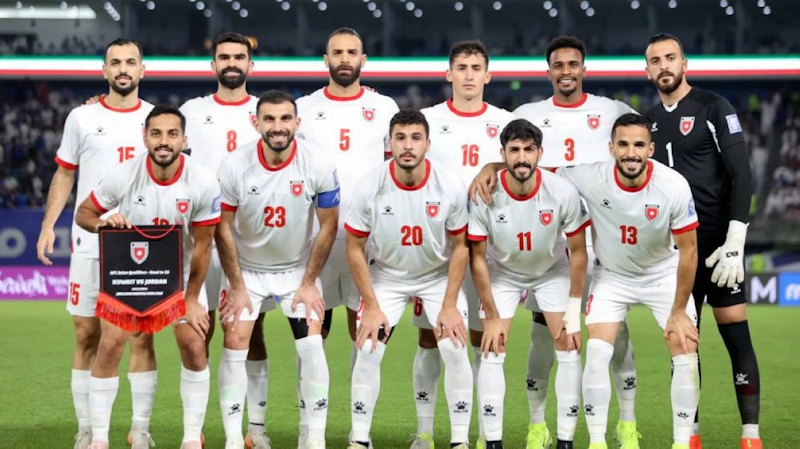
(Jordanian national football team)
(Uzbekistan national football team)
4. Revolutionary 48-Team Format Explained
The expansion from 32 to 48 teams represents FIFA’s most significant structural change since the tournament adopted 32 teams in 1998. This isn’t merely numerical expansion—it’s a fundamental reimagining of World Cup structure, qualification pathways, and competitive dynamics.
Why Expand? FIFA’s Rationale
Global Representation: FIFA President Gianni Infantino championed expansion as promoting football’s global development. By increasing spots from 32 to 48, more confederations receive additional allocations, providing pathways for nations historically excluded from World Cups.
Financial Motivation: More teams means more matches (104 vs. 64), more ticket sales, more broadcast hours, and ultimately more revenue. Critics argue financial considerations outweigh sporting merit, while supporters contend that expanding resources funds grassroots development worldwide.
Competitive Opportunities: Smaller nations gain World Cup experience that accelerates domestic football growth. The economic and infrastructure benefits of qualifying—plus the inspiration factor for youth—create developmental multipliers beyond tournament participation.
The 12-Group Structure
Group Formation:
- 48 teams divided into 12 groups of 4 teams each
- Each team plays 3 group-stage matches (everyone plays everyone once)
- Total group-stage matches: 72 (12 groups × 6 matches per group)
Seeding System:
- Pot 1: Three hosts (automatic) + 9 highest-ranked teams = 12 teams
- Pot 2: Next 12 highest-ranked teams
- Pot 3: Next 12 highest-ranked teams
- Pot 4: Final 12 teams (includes playoff winners regardless of ranking)
This seeding ensures geographic distribution while maintaining competitive balance. FIFA rules prevent more than two teams from the same confederation in any group (except UEFA, which has 16 teams requiring multiple per group).
Advancement Rules: The Critical Change
Who Advances:
- Group winners (12 teams) - automatic qualification
- Second-place finishers (12 teams) - automatic qualification
- Eight best third-place teams across all 12 groups
This creates a total of 32 teams advancing to knockout rounds—double the previous 16.
Third-Place Team Ranking Criteria (in order):
- Points earned
- Goal difference
- Goals scored
- Team conduct (fair play) score
- FIFA World Ranking
This ranking determines which eight third-place teams advance. Theoretically, a team with just 3 points (one win) could advance if results across groups favor them.
Strategic Implications:
The third-place advancement pathway creates fascinating dynamics:
- Teams trailing in group standings maintain realistic advancement hopes even after two matches
- Final group-stage matches could feature tactical calculations about whether playing for third place is preferable to risking second place
- Defensive strategies become viable—teams might prioritize limiting goals against over attacking for wins, since goal difference ranks third-place teams
The New Round of 32
Revolutionary Addition:
For the first time in modern World Cup history, a Round of 32 precedes the traditional Round of 16. This knockout stage begins on June 28, immediately after group play concludes June 27.
Bracket Structure:
FIFA designed the bracket ensuring top seeds receive optimal paths. Spain (No. 1) and Argentina (No. 2) were placed in opposite bracket halves, meaning they cannot meet before the final (assuming both win groups and advance successfully). France (No. 3) and England (No. 4) similarly occupy different halves.
This bracket engineering eliminates randomness from previous formats where top seeds might clash in Round of 16 or quarterfinals based solely on which groups they won.
Match Allocation:
The specific Round of 32 matchups depend on which groups the eight third-place teams emerge from. FIFA’s bracket structure predetermines which group winners face which third-place teams, but the actual opponents won’t be known until group play concludes.
For example, Group A winner might face “Third-place team from Groups F/G/H” (whichever of those groups produces a third-place team in the top eight). This creates complexity but ensures competitive balance.
Knockout Stage Progression
Round of 32: June 28 - July 3 (16 matches, 32→16 teams)
Round of 16: July 4 - July 7 (8 matches, 16→8 teams)
Quarterfinals: July 9 - July 11 (4 matches, 8→4 teams)
- Venues: Los Angeles (SoFi Stadium), Boston (Gillette Stadium), Kansas City (Arrowhead Stadium), Miami (Hard Rock Stadium)
Semifinals: July 14 & 15 (2 matches, 4→2 teams)
- Venues: Arlington, TX (AT&T Stadium - July 14), Atlanta (Mercedes-Benz Stadium - July 15)
Third-Place Playoff: July 18 (1 match)
Final: July 19 at MetLife Stadium, New Jersey (1 match, crowning champions)
Total Match Count and Player Load
104 Total Matches:
- Group Stage: 72 matches
- Round of 32: 16 matches
- Round of 16: 8 matches
- Quarterfinals: 4 matches
- Semifinals: 2 matches
- Third-Place Playoff: 1 match
- Final: 1 match
Player Load Implications:
Teams reaching the final will play 8 matches (3 group + 5 knockout) compared to 7 matches in the previous format. This additional match creates:
- Increased injury risk from accumulated fixture congestion
- Greater squad depth requirements (successful teams need 23-player rosters with genuine depth)
- Tactical rotation importance (managing player minutes across 39 days becomes crucial)
- Recovery time concerns (shorter rest periods between knockout matches)
Criticism and Support
Critics argue:
- Tournament dilution: More teams means lower average quality, potentially producing lopsided matches
- Group stage devaluation: Allowing eight third-place teams to advance reduces group-stage stakes (teams can afford poor performances)
- Commercial prioritization: Expansion serves financial interests over sporting merit
- Excessive length: 39 days strains player fitness and fan attention
Supporters counter:
- Global development: More nations experiencing World Cups accelerates football growth
- Upset potential increases: More teams create more David vs. Goliath opportunities
- Extended celebration: Longer tournaments provide more football for fans to enjoy
- Financial benefits fund grassroots: Increased revenue trickles down to develop football globally
What Format Means for 2026
The 48-team format fundamentally changes tournament strategy:
Defensive tactics gain viability: Third-place advancement means minimizing goals against can be as valuable as scoring freely
Upsets become more likely: With more teams and more matches, statistical probability favors unexpected results
Cinderella runs face longer paths: Previous format required four knockout victories to win; new format requires five—making championship runs from lower seeds even more impressive
Group-stage drama diminishes: Knowing that even third place might advance reduces final matchday tension (though ranking calculations create different drama)
Continental representation increases: Africa (9 teams vs. previous 5), Asia (8 vs. 4-5), and CONCACAF (6 vs. 3-4) see massive representation increases, bringing diverse playing styles and tactics
The 2026 tournament will test whether expansion enhances or diminishes World Cup magic. Only after July 19 will we know if FIFA’s gamble succeeded in creating a more inclusive, exciting tournament—or if critics’ concerns about dilution prove valid.
5. The 16 Stadiums Hosting Football History
The 2026 World Cup will unfold across 16 stadiums in three nations—the most venues since the 2002 tournament in Japan and South Korea (which used 20 stadiums). This geographic spread creates logistical complexity but allows more fans to experience matches without traveling across continents.
Due to FIFA’s strict rules against commercial stadium naming, venues will use alternative names during the tournament (shown in parentheses where applicable). Here’s the complete stadium guide:
🇲🇽 MEXICO (3 Stadiums)
1. Estadio Azteca - Mexico City
- FIFA Name: Estadio Azteca
- Capacity: 87,523 (being expanded to 90,000+ for World Cup)
- Host Matches: Opening match (June 11), multiple group and knockout matches
The most iconic venue in the tournament. Estadio Azteca becomes the first stadium ever to host three World Cup opening matches (1970, 1986, 2026) and three tournaments overall. This historic ground witnessed Pelé’s brilliance in 1970 and Diego Maradona’s “Hand of God” plus “Goal of the Century” in 1986.
Located in Mexico City at 2,240 meters (7,350 feet) elevation, the altitude creates unique challenges—thinner air affects stamina, ball movement, and recovery. Teams playing here require specific altitude acclimatization strategies.
The stadium is undergoing renovations expanding capacity beyond 90,000 while modernizing facilities to FIFA 2026 standards. Mexico’s opening match against South Africa on June 11 will showcase this legendary venue to a new generation.
2. Estadio BBVA - Monterrey
- FIFA Name: Estadio Monterrey
- Capacity: 53,500
- Host Matches: Group stage and Round of 32 matches
Home to Mexican club Monterrey, this modern stadium opened in 2015 and represents Mexico’s contemporary football infrastructure. The facility features state-of-the-art amenities, excellent sightlines, and climate control capabilities managing Monterrey’s hot summers.
Located in Mexico’s third-largest city in the northeastern state of Nuevo León, Monterrey brings industrial Mexico’s passion for football to the world stage.
3. Estadio Akron - Guadalajara
- FIFA Name: Estadio Guadalajara
- Capacity: 46,232 (expandable to 48,071 with temporary seating)
- Host Matches: Group stage matches
Home to Chivas Guadalajara—one of Mexico’s most popular clubs—this stadium opened in 2010 and showcases modern Mexican football architecture. Guadalajara, Mexico’s second-largest city, brings deep football tradition and passionate fan culture.
The stadium’s unique volcanic stone exterior reflects local geological heritage, creating distinctive aesthetics.
🇺🇸 UNITED STATES (11 Stadiums)
4. MetLife Stadium - East Rutherford, New Jersey
- FIFA Name: New York New Jersey Stadium
- Capacity: 82,500 (expandable to 87,000 with temporary seating)
- Host Matches: Final (July 19), group stage, knockout rounds
The tournament’s crown jewel. MetLife Stadium will host the World Cup Final on July 19—the culmination of 39 days of global competition. Located just miles from New York City in New Jersey, the stadium provides access to America’s largest metropolitan area.
Home to NFL’s New York Giants and Jets, MetLife regularly hosts major events including Super Bowls and international football friendlies. The stadium’s proximity to Manhattan, excellent transportation infrastructure, and massive capacity make it ideal for the final.
Hosting the final represents triumph for the New York/New Jersey region’s 2026 bid—they competed against Dallas and Los Angeles for this honor.
5. AT&T Stadium - Arlington, Texas
- FIFA Name: Dallas Stadium
- Capacity: 80,000 (expandable to 105,000 with standing room)
- Host Matches: Most games of any venue (9 total including semifinal on July 14), group stage through semifinal
“Jerry’s World” (named for owner Jerry Jones) is the tournament’s largest stadium and most technologically advanced venue. Home to the Dallas Cowboys, AT&T Stadium features a massive retractable roof and the world’s largest HD video board.
The stadium will host nine total matches—more than any other venue—including a semifinal on July 14. Its central U.S. location, massive capacity, and spectacular amenities made it irresistible for FIFA scheduling.
Texas football culture and Dallas’s international airport connectivity create ideal hosting conditions.
6. Mercedes-Benz Stadium - Atlanta
- FIFA Name: Atlanta Stadium
- Capacity: 71,000 (expandable to 75,000)
- Host Matches: Semifinal (July 15), group stage, Round of 32, Round of 16
This architectural marvel features a retractable roof resembling a camera aperture—stunning aesthetics meeting engineering innovation. Opened in 2017, it’s among the tournament’s newest venues.
Home to NFL’s Atlanta Falcons and MLS’s Atlanta United (which regularly draws 40,000+ fans), the stadium demonstrated football passion when hosting the 2026 Club World Cup. Atlanta’s transportation hub status (world’s busiest airport) and Southern hospitality create welcoming atmosphere.
Hosting a semifinal on July 15 elevates Atlanta’s global profile.
7. Lumen Field - Seattle
- FIFA Name: Seattle Stadium
- Capacity: 69,000
- Host Matches: Group stage, Round of 32, Round of 16
Home to NFL’s Seahawks and MLS’s Sounders, Lumen Field brings the Pacific Northwest’s passionate football culture. Seattle Sounders regularly draw 30,000+ fans, demonstrating the region’s football enthusiasm.
The stadium holds the Guinness World Record for loudest outdoor sports venue (142.2 decibels during an NFL game). This noise—generated by the stadium’s design directing sound onto the field—creates intimidating atmosphere.
Located on Seattle’s waterfront with Cascade and Olympic Mountain views, Lumen Field offers spectacular scenery alongside football action.
8. SoFi Stadium - Los Angeles (Inglewood)
- FIFA Name: Los Angeles Stadium
- Capacity: 70,000 (expandable to 100,000 for major events)
- Host Matches: U.S. opener (June 12), quarterfinal, group stage, Round of 32
The most expensive stadium ever built ($5+ billion), SoFi Stadium opened in 2020 and immediately established itself as an architectural icon. The translucent roof and open-air design create unique California ambiance.
Home to NFL’s Rams and Chargers, SoFi will host the 2028 Olympic Opening and Closing Ceremonies—making it central to Los Angeles’s sports infrastructure through the late 2020s.
The U.S. national team’s tournament opener on June 12 against Paraguay brings massive pressure and attention to this venue. Additionally, hosting a quarterfinal solidifies Los Angeles’s status as a tournament centerpiece.
9. NRG Stadium - Houston
- FIFA Name: Houston Stadium
- Capacity: 72,220
- Host Matches: Group stage, Round of 32, Round of 16
Home to NFL’s Texans, NRG Stadium features a retractable roof managing Houston’s intense heat and humidity. The stadium has hosted numerous U.S. national team matches and international friendlies, demonstrating Houston’s football infrastructure.
Houston’s massive international population—including significant soccer-passionate communities from Latin America, Africa, and Asia—creates diverse, knowledgeable fan base. The city’s energy sector wealth supports world-class sporting venues.
10. GEHA Field at Arrowhead Stadium - Kansas City
- FIFA Name: Kansas City Stadium
- Capacity: 76,416
- Host Matches: Quarterfinal, group stage, Round of 32
Arrowhead Stadium holds the Guinness World Record for loudest outdoor sports venue (142.2 decibels), matching Seattle. Home to NFL’s Chiefs and MLS’s Sporting KC, the stadium brings Midwest passion.
Hosting a quarterfinal on July 11 brings World Cup’s biggest stages to America’s heartland. Kansas City’s central location and passionate fan base make it ideal for knockout football.
11. Hard Rock Stadium - Miami Gardens, Florida
- FIFA Name: Miami Stadium
- Capacity: 64,767 (expandable to 67,518)
- Host Matches: Third-place playoff (July 18), group stage, Round of 32, quarterfinal
Home to NFL’s Dolphins, Hard Rock Stadium regularly hosts international football friendlies and CONCACAF competitions. The stadium’s renovated canopy provides shade while maintaining open-air atmosphere—crucial in Miami’s subtropical climate.
Miami’s massive Latin American population and Caribbean connections create unmatched football atmosphere in the United States. The city feels like neutral ground for many Latin American teams.
Hosting the third-place playoff on July 18 (one day before the final) provides consolation prize drama.
12. Lincoln Financial Field - Philadelphia
- FIFA Name: Philadelphia Stadium
- Capacity: 69,176
- Host Matches: Group stage, Round of 32
Home to NFL’s Eagles, “The Linc” brings Philadelphia’s passionate, demanding fan culture. The city’s revolutionary history and working-class sports identity create intense atmosphere.
Philadelphia’s East Coast location provides easy access for European fans and media.
13. Gillette Stadium - Foxborough, Massachusetts
- FIFA Name: Boston Stadium
- Capacity: 65,878 (being expanded to 70,000)
- Host Matches: Quarterfinal, group stage, Round of 16
Home to NFL’s Patriots and MLS’s Revolution, Gillette Stadium serves the Boston metropolitan area. The venue is undergoing renovations specifically for the World Cup, adding temporary seating.
Boston’s educational institutions, international population, and sports history create sophisticated, knowledgeable fan base. Hosting a quarterfinal recognizes New England’s importance in American sports culture.
14. Levi’s Stadium - Santa Clara, California
- FIFA Name: San Francisco Bay Area Stadium
- Capacity: 68,500 (expandable to 75,000)
- Host Matches: Group stage, Round of 32
Home to NFL’s 49ers, Levi’s Stadium opened in 2014 in Silicon Valley, providing ultra-modern amenities and technology integration. The stadium serves the San Francisco Bay Area—one of America’s most diverse, football-passionate regions.
The venue hosted the 2026 Club World Cup final, demonstrating its capability for major football events.
🇨🇦 CANADA (2 Stadiums)
15. BMO Field - Toronto
- FIFA Name: Toronto Stadium
- Capacity: 30,000 (being expanded to 45,500 with temporary seating)
- Host Matches: Canada opener (June 12), group stage, Round of 32
Home to MLS’s Toronto FC and CFL’s Argonauts, BMO Field is Canada’s football cathedral. The stadium is undergoing significant expansion specifically for the World Cup, adding 17,000 temporary seats to meet FIFA’s 40,000 minimum.
Toronto’s multicultural population—one of the world’s most diverse cities—creates unmatched football atmosphere in Canada. Nearly every nationality and football culture is represented in Toronto’s population.
Canada’s tournament opener on June 12 brings historic significance—their first World Cup home match and only their second World Cup appearance ever (first since 1986).
16. BC Place - Vancouver
- FIFA Name: Vancouver Stadium
- Capacity: 54,000
- Host Matches: Group stage, Round of 32, Round of 16
Home to MLS’s Whitecaps and CFL’s Lions, BC Place features a retractable roof managing Vancouver’s rainy climate. Located on False Creek waterfront with mountain backdrops, it’s the tournament’s most scenically situated stadium.
BC Place hosted the 2015 Women’s World Cup final, demonstrating capability for football’s biggest stages. Vancouver’s Pacific location brings Asian and Oceanic fans closer to World Cup action.
Travel and Logistics
The 16 venues span approximately 5,000 miles (8,000 km) from Vancouver to Miami, crossing four time zones (Pacific, Mountain, Central, Eastern). This creates complex logistics:
For Teams:
- Groups are geographically clustered (Western, Central, Eastern regions) minimizing travel during group stage
- Host nations play all group matches within their own country
- Knockout stage advancement determines travel—teams advancing far may crisscross the continent
For Fans:
- Multi-city attendance requires significant travel planning and expense
- Time zone differences affect viewing schedules globally
- Regional clustering allows fans to follow groups without intercontinental travel
For Broadcasters:
- Staggered kickoff times across four time zones allow global audiences to watch multiple matches daily
- Peak viewing hours vary by market—evening matches in one time zone are afternoon/morning elsewhere
The venue diversity showcases North American football’s geographic spread while creating logistical challenges unprecedented in World Cup history. Success requires coordination across three nations, 16 cities, and millions of fans.
6. Tournament Schedule and Key Dates
The 2026 FIFA World Cup unfolds over 39 days from June 11 through July 19, 2026. Here’s the complete tournament timeline:
Opening Matches - June 11-12
June 11, 2026 - THE OPENING
- 3:00 PM ET - Mexico vs. South Africa (Estadio Azteca, Mexico City)
- The tournament’s ceremonial start at football’s most historic venue
- Third time Estadio Azteca opens a World Cup (1970, 1986, 2026)
June 12, 2026 - Co-Hosts Enter
- 3:00 PM ET - Canada vs. UEFA Playoff A Winner (BMO Field, Toronto)
- Canada’s historic home World Cup debut
- Emotional moment for Canadian football
- 9:00 PM ET - USA vs. Paraguay (SoFi Stadium, Los Angeles)
- U.S. tournament begins under massive pressure
- Prime-time kickoff for American television audience
Group Stage - June 11-27
The group stage runs 17 days with multiple matches daily across various time zones. Each team plays three matches—one against every group opponent.
Daily Schedule Pattern:
- Early matches (12:00-1:00 PM ET): Eastern time zone afternoon, suitable for European evening viewing
- Mid-afternoon matches (3:00-5:00 PM ET): Central scheduling
- Evening matches (7:00-10:00 PM ET): Prime time for American audiences, late night/early morning in Europe and Asia
Key Group-Stage Dates:
June 13 - Major Matches:
- Brazil vs. Morocco (MetLife Stadium, 6:00 PM ET) - Group C opener
- Germany vs. Curaçao (NRG Stadium, Houston, 1:00 PM ET) - David vs. Goliath spectacle
June 19 - Critical Matchday 2:
- USA vs. Australia (Lumen Field, Seattle, 3:00 PM ET) - Potential group-deciding match
- Scotland vs. Morocco (Gillette Stadium, 6:00 PM ET)
June 27 - Final Group Matches:
- All 12 groups conclude simultaneously in each group to prevent tactical manipulation
- Jordan vs. Argentina (AT&T Stadium, Dallas, 10:00 PM ET)
- Decisive matches determining final group standings and third-place rankings
Round of 32 - June 28 - July 3
The revolutionary new knockout round features 16 matches over six days. Specific matchups depend on group results and third-place team rankings, so exact pairings won’t be confirmed until June 27.
Format:
- Single elimination begins
- Extra time (30 minutes) if tied after 90 minutes
- Penalty shootouts if still tied after extra time
- No replays
Match Distribution:
- June 28: 3 matches
- June 29-July 1: 3 matches daily
- July 2-3: 2 matches daily
Stadiums hosting Round of 32 include venues across all three countries, maintaining geographic distribution.
Round of 16 - July 4-7
Eight matches reducing the field from 16 to 8 teams.
July 4 (U.S. Independence Day):
- Two matches scheduled - potentially including U.S. if they advance
July 5-7:
- Two matches daily across American holiday weekend
- Stadiums: Houston, Philadelphia, New Jersey, Mexico City, Dallas, Seattle, Atlanta, Vancouver
Quarterfinals - July 9-11
Four matches determining semifinalists.
Confirmed Venues:
- July 9, 4:00 PM ET - Gillette Stadium, Boston
- July 10, 3:00 PM ET - SoFi Stadium, Los Angeles
- July 11, 5:00 PM ET - Hard Rock Stadium, Miami
- July 11, 9:00 PM ET - Arrowhead Stadium, Kansas City
The quarterfinal venues represent geographic diversity—East Coast, West Coast, South, and Midwest—providing fans across North America opportunities to attend knockout football’s highest level before semifinals.
Semifinals - July 14-15
Two matches determining finalists.
July 14, 3:00 PM ET - AT&T Stadium, Arlington, Texas
- Quarterfinal 1 Winner vs. Quarterfinal 2 Winner
- Dallas’s massive stadium showcases first semifinal
July 15, 3:00 PM ET - Mercedes-Benz Stadium, Atlanta
- Quarterfinal 3 Winner vs. Quarterfinal 4 Winner
- Atlanta’s architectural marvel hosts second semifinal
These venues were selected for capacity, facilities, and geographic significance. Both feature retractable roofs managing July heat while providing spectacular atmospheres.
Third-Place Playoff - July 18
July 18, 3:00 PM ET - Hard Rock Stadium, Miami
The consolation match determining third place. While some players and fans consider this match anticlimactic after semifinal defeats, it provides closure and determines final podium positioning.
THE FINAL - July 19
July 19, 3:00 PM ET - MetLife Stadium, East Rutherford, New Jersey
Football’s ultimate match crowns 2026 champions at the tournament’s largest stadium. The 82,500+ capacity (potentially expanding to 87,000) provides spectacular setting for deciding football’s greatest prize.
MetLife’s proximity to New York City—global media capital—ensures maximum attention and cultural impact. The final’s 3:00 PM ET kickoff accommodates global viewership:
- 8:00 PM BST (UK/Ireland)
- 9:00 PM CEST (Continental Europe)
- 12:00 AM (midnight) Gulf states
- 4:00 AM (July 20) East Asia
Rest Days and Recovery
FIFA scheduling provides varying rest between knockout matches:
Group to Round of 32: 1-2 days rest (some teams play June 27, next match June 29)
Round of 32 to Round of 16: 1-3 days rest depending on match scheduling
Round of 16 to Quarterfinals: 2-3 days
Quarterfinals to Semifinals: 3-4 days
Semifinals to Final: 4-5 days (longest rest ensuring finalists arrive fresh)
The compressed schedule creates fixture congestion concerns, particularly for teams with injury issues or shallow rosters. Squad depth becomes critical—successful teams need genuine quality across all 23 roster spots.
Attendance Projections
FIFA projects the 2026 World Cup will break the all-time attendance record:
Current Record: 3.59 million total attendance (1994 World Cup, USA)
2026 Projection: 5+ million total attendance across 104 matches
Average attendance of 48,000+ per match seems conservative given stadium capacities—many venues hold 65,000-85,000. Several matches (opening, USA games, semifinals, final) will sell out massive stadiums, pushing averages higher.
The extended tournament (39 days vs. 32 in previous formats) and geographic diversity across three countries allow more fans to attend without prohibitive travel costs or time commitments.
7. Notable Storylines and Group Analysis
The Messi-Ronaldo Farewell Tour
Lionel Messi (Argentina, turning 39 in June 2026) and Cristiano Ronaldo (Portugal, turning 41 in February 2026) will almost certainly make their final World Cup appearances, closing careers that have defined football’s modern era.
Messi’s Quest: Defending Argentina’s 2022 title would be unprecedented in modern football. Only Italy (1934, 1938) and Brazil (1958, 1962) successfully defended titles, both in very different eras. Messi leading back-to-back triumphs while pushing 40 would solidify already-unassailable GOAT credentials.
Ronaldo’s Last Chance: Portugal’s group with Colombia, Uzbekistan, and a playoff winner provides favorable advancement odds. Ronaldo—who has never won a World Cup—faces final opportunity to capture the only trophy eluding his legendary career. At 41, his physical decline from prime years is evident, but championship mentality and big-game experience remain.
The Emotional Significance: For global fans who grew up watching these two titans dominate football for 20 years, 2026 represents bittersweet closure. Every Messi or Ronaldo goal, assist, or moment carries added weight knowing it’s the last time we’ll witness their World Cup magic.
Haaland’s World Cup Debut
Erling Haaland enters his first World Cup as arguably the world’s best striker. Norway’s 28-year absence (since 1998) meant Haaland—despite being generational talent—had never experienced football’s biggest stage.
Norway’s Group I placement with France, Senegal, and a playoff winner creates realistic advancement possibilities despite tough competition. Haaland vs. France’s defense in the group opener will be must-watch football—arguably the tournament’s premier group-stage clash.
Haaland’s physical dominance, positioning excellence, and lethal finishing make him capable of Golden Boot contention if Norway provides sufficient service. However, Norway’s overall squad quality lags elite nations, potentially limiting Haaland’s impact if the team struggles collectively.
England’s Championship Drought
66 Years and Counting: England haven’t won since their home triumph in 1966. Despite reaching semifinals (2018) and Euro 2020 final, the Three Lions cannot break through. Thomas Tuchel’s appointment—a German managing England—represents desperate, pragmatic recognition that English coaches haven’t delivered championships.
Group L (Croatia, Panama, Ghana) provides advancement pathway, but England have proven capable of disappointing against seemingly weaker opposition. The Croatia opener brings psychological ghosts from 2018’s semifinal defeat—revenge opportunity or curse continuation?
Tuchel must manage a talented but mentally fragile squad featuring Harry Kane (seeking major trophy validation), Jude Bellingham (young genius requiring protection), and Phil Foden (brilliant but inconsistent).
Potential “Groups of Death”
Group C - Brazil, Morocco, Haiti, Scotland: Morocco’s 2022 semifinal run and defensive excellence make them genuine threats to Brazil. Scotland’s return brings tactical discipline. While Haiti are underdogs, every match promises competitive intensity.
Group I - France, Senegal, Norway, Playoff Winner: France, Senegal, and Norway (Haaland) create three-way battle for top two places. If Iraq wins the playoff, this becomes even more competitive. No easy matches exist.
Group L - England, Croatia, Panama, Ghana: England and Croatia’s history, plus Ghana’s attacking potential, creates dangerous dynamics. Panama’s defensive organization could frustrate favorites.
Upset Potential and Cinderella Stories
Cape Verde vs. Saudi Arabia (Group H, June 26, Houston): Both teams are underdogs in groups with Spain and Uruguay. This match could determine third-place positioning and potential advancement—massive stakes for both nations’ World Cup dreams.
Curaçao vs. Ecuador (Group G): If Curaçao can contain Ecuador, they might accumulate the points needed for surprising third-place advancement. Ecuador aren’t invincible—Curaçao’s defensive organization could frustrate them.
Jordan vs. Algeria (Group J): Two debut/returning nations battle for third place behind Argentina and Austria. These matches between “underdog” nations often produce tournament’s most passionate, dramatic football.
The Italy Question
If Italy qualifies through UEFA playoffs, their draw becomes massive storyline. The Azzurri—four-time champions ranked No. 1 overall—facing potential group-stage elimination after missing 2018 and 2022 would be shocking. However, their playoff path includes Wales, Northern Ireland, or Bosnia and Herzegovina opponents—all very winnable for Italy’s quality.
Italy’s placement in Group B (with Canada, Switzerland, Qatar if they qualify) would transform that group’s dynamics entirely. Switzerland vs. Italy brings European rivalry; Italy vs. Canada in Toronto provides fascinating cultural clash (massive Italian-Canadian population).
Host Nations’ Pressure
United States: Anything short of quarterfinals would be considered disappointing given home advantage, group placement (Paraguay, Australia, playoff winner), and investment in Mauricio Pochettino’s coaching. The pressure on American players will be immense—entire nation watching their every touch.
Mexico: Seven consecutive Round of 16 eliminations (1994-2018) haunt Mexican football. Can El Tri finally break through on home soil? Their group (South Africa, South Korea, playoff winner) provides advancement opportunity, but knockout success has proven elusive.
Canada: Realistic expectations remain measured—reaching Round of 16 would be historic achievement for a nation playing only their second World Cup. However, home support in Toronto could inspire beyond expectations.
African Nations’ Advancement Hopes
Africa sends nine teams—the most ever. Morocco (2022 semifinalists), Senegal (2021 AFCON champions), Egypt, Tunisia, Algeria, Côte d’Ivoire, Ghana, South Africa, and Cape Verde all carry continental hopes.
Can Africa build on Morocco’s breakthrough and send multiple teams to later rounds? The distribution across groups provides opportunities—avoiding concentration in “death groups” spreads advancement chances.
The North American Derby
If the U.S. and Mexico both advance (likely), could they meet in knockout rounds? FIFA’s bracket structure makes this possible depending on group finishes and third-place distributions. A USA vs. Mexico knockout match would be the tournament’s highest-rated North American television event by massive margins.
8. The Road Ahead: Playoffs and Final Spots
Six World Cup spots remain unfilled pending March 2026 playoffs. These playoffs feature 22 teams competing for final berths—creating their own dramatic tournaments.
UEFA Playoffs (4 Spots)
16 Teams, 4 Paths, 4 Winners Advance
The 12 second-place teams from UEFA qualifying groups plus 4 teams from 2024-25 Nations League create 16 playoff participants. They’re divided into four paths of four teams each:
Path A:
- Wales vs. Bosnia and Herzegovina (Semifinal)
- Northern Ireland vs. Italy (Semifinal)
- Winners meet in final for World Cup spot
Path B:
- Turkey vs. Romania (Semifinal)
- Slovakia vs. Kosovo (Semifinal)
- Winners meet in final
Path C:
- Denmark vs. North Macedonia (Semifinal)
- Czech Republic vs. Republic of Ireland (Semifinal)
- Winners meet in final
Path D:
- Poland vs. Ukraine (Semifinal)
- Sweden vs. Albania (Semifinal)
- Winners meet in final
The Italy Factor:
Italy—ranked No. 1 globally but failed to qualify automatically—must win two matches to reach the World Cup. Their potential absence would be shocking; their qualification transforms whichever group they enter.
Format:
- Single-elimination matches
- Home advantage determined by draw/rankings
- Semifinals: March 26, 2026
- Finals: March 31, 2026
Intercontinental Playoffs (2 Spots)
6 Teams, 2 Paths, 2 Winners Advance
One team each from AFC (Asia), CAF (Africa), CONMEBOL (South America), OFC (Oceania), plus two from CONCACAF compete:
Path 1:
- Semifinal 1: New Caledonia vs. Jamaica
- Semifinal 2: Winner vs. DR Congo (seeded, automatic final berth)
Path 2:
- Semifinal 1: Bolivia vs. Suriname
- Semifinal 2: Winner vs. Iraq (seeded, automatic final berth)
Seeding Explanation:
DR Congo (CAF) and Iraq (AFC) had highest FIFA rankings among intercontinental playoff participants, earning byes directly to path finals. The four lower-ranked teams play semifinals.
Tournament Details:
- Host: Mexico
- Semifinals: March 20-21, 2026
- Finals: March 25, 2026
Potential Storylines:
- Iraq’s Return: Iraq last appeared in 1986. Their football endured decades of war and instability. Qualifying would be emotional triumph for Iraqi people.
- New Caledonia’s Dream: This French Pacific territory (population 290,000) could become the smallest nation ever to qualify if they navigate playoffs. Their semifinal with Jamaica provides Caribbean vs. Oceania cultural clash.
- Suriname’s Heritage: This South American nation shares heritage with Netherlands (former Dutch colony). Many Dutch internationals have Surinamese roots. Their own team reaching the World Cup would validate Suriname’s football development.
Impact on Groups
The playoff outcomes dramatically affect specific groups:
Group A: UEFA Playoff D winner joins Mexico, South Africa, South Korea
- Denmark (ranked 21) would make this highly competitive
- Lower-ranked winners (North Macedonia, Ireland) less threatening
Group B: UEFA Playoff A winner joins Canada, Qatar, Switzerland
- Italy’s presence transforms this into extremely difficult group
- Wales brings experience; Northern Ireland/Bosnia less threatening
Group D: UEFA Playoff C winner joins USA, Paraguay, Australia
- Turkey (ranked 25) would significantly elevate difficulty for U.S.
- Slovakia/Kosovo/Romania/Czech Republic all bring European quality
Group F: UEFA Playoff B winner joins Netherlands, Tunisia, Japan
- Any winner strengthens this group considerably
Group G: Uzbekistan or Curaçao (depending on interpretation)
- If Curaçao, massive underdog story
- If Uzbekistan, Asian representation
Group I: FIFA Playoff 2 winner joins France, Senegal, Norway
- Iraq would bring Middle Eastern representation and passionate support
- Bolivia/Suriname bring South American attributes
Group K: FIFA Playoff 1 winner joins Portugal, Colombia, Uzbekistan
- DR Congo would bring African power
- Jamaica/New Caledonia would be underdogs
Timing and Preparation
The March playoff timing creates challenges:
Limited Preparation: Playoff winners have approximately 2.5 months between qualification and tournament start—tight window for:
- Integrating late roster additions
- Finalizing tactical approaches
- Arranging friendlies
- Managing player fitness (European season still ongoing)
Injury Risks: March falls mid-European season—injury risks to key players between qualification and tournament
Psychological Impact: Teams qualifying late may feel rushed versus nations preparing since 2025
However, momentum from successful playoffs could provide psychological lift—teams arriving confident from competitive victories versus teams who qualified months earlier and potentially lost sharpness.
Conclusion: Football’s Biggest Stage Ever
The 2026 FIFA World Cup represents an unprecedented moment in football history. Never before has the tournament featured 48 teams, never before has it spanned three nations, and never before have the stakes—athletic, economic, cultural—been higher.
For the four debut nations—Jordan, Uzbekistan, Cape Verde, and Curaçao—the journey to this point validates decades of dreams, investment, and dedication. Their presence demonstrates that World Cup glory isn’t reserved for traditional powers alone. Small islands, desert kingdoms, and Central Asian republics can share football’s biggest stage with Brazil, Germany, and Argentina.
For football powers seeking redemption—England chasing 1966 glory, Italy fighting to end consecutive absences, the United States seeking to validate home advantage—2026 provides opportunity and pressure in equal measure.
For legends like Lionel Messi and Cristiano Ronaldo, this final World Cup offers closure to careers that defined modern football. Every match they play carries emotional weight knowing it’s the last time we’ll witness their particular genius in football’s ultimate arena.
For FIFA, the 48-team expansion is both gamble and opportunity. If successful, it validates expansion proponents who argued that inclusivity enhances football’s global reach. If the tournament suffers from quality dilution or logistical failures, critics’ warnings about prioritizing commerce over sport will echo loudly.
For the millions who will pack stadiums from Mexico City to New Jersey, from Vancouver to Miami, the 2026 World Cup provides 39 days of unparalleled drama, passion, and shared human experience that transcends sport and becomes cultural phenomenon.
The draw on December 5, 2025, transformed abstract concept into tangible reality. Now we know that Mexico faces South Africa on June 11 in Estadio Azteca’s historic opener. We know Brazil and Morocco collide June 13 in New Jersey. We know Curaçao meets Germany June 14 in Houston—tiny island versus four-time champions in the ultimate David vs. Goliath narrative.
From June 11 through July 19, 2026, football will unite and divide, inspire and heartbreak, validate and devastate. Champions will emerge. Underdogs will shock. Stars will shine. Dreams will shatter. And through it all, football’s beautiful game will remind us why billions worldwide pause their lives every four years to watch 22 players chase a ball across grass.
The 2026 FIFA World Cup will be football’s biggest show. The stage is set. The groups are drawn. The stadiums await. In June 2026, the world’s greatest sporting spectacle begins.
Frequently Asked Questions
Q: How many teams are competing in the 2026 World Cup?
A: 48 teams—an expansion from the previous 32-team format. This is the first time the World Cup will feature 48 nations, creating 12 groups of 4 teams each.
Q: Which nations are making their World Cup debut in 2026?
A: Four nations confirmed: Jordan (Asia), Uzbekistan (Asia), Cape Verde (Africa), and Curaçao (Caribbean/CONCACAF). Curaçao becomes the smallest nation by population (156,000-185,000) ever to qualify. Potentially, New Caledonia, Suriname, Kosovo, or Albania could add to this list if they win March 2026 playoffs.
Q: Where is the 2026 World Cup being played?
A: Across three countries: United States (11 stadiums), Mexico (3 stadiums), and Canada (2 stadiums)—16 total venues spanning from Vancouver to Miami, covering four time zones.
Q: What is the new tournament format?
A: 12 groups of 4 teams each in group stage. Top 2 from each group plus 8 best third-place teams (32 total) advance to knockout rounds. This creates a new “Round of 32” before the traditional Round of 16, quarterfinals, semifinals, and final.
Q: When does the 2026 World Cup start and finish?
A: Opening match: June 11, 2026 (Mexico vs. South Africa at Estadio Azteca, Mexico City). Final: July 19, 2026 (MetLife Stadium, New Jersey). The tournament runs 39 days total.
Q: Where will the World Cup Final be played?
A: MetLife Stadium in East Rutherford, New Jersey (serving New York/New Jersey region) on July 19, 2026, at 3:00 PM ET. The stadium will hold approximately 82,500-87,000 fans for the final.
Q: How many matches will be played total?
A: 104 matches—up from 64 in previous 32-team formats. This includes 72 group-stage matches and 32 knockout-stage matches.
Q: Which six spots are still unfilled?
A: Four spots will be determined by UEFA playoffs in March 2026 (16 European teams competing in 4 paths). Two spots will come from intercontinental playoffs in Mexico in March 2026 (6 teams from various confederations competing).
Q: Could Italy miss a third consecutive World Cup?
A: Yes. Despite being ranked No. 1 globally, Italy failed to automatically qualify and must win UEFA playoff matches in March 2026. They face Northern Ireland in a playoff semifinal—if they win, they face either Wales or Bosnia and Herzegovina in the final for a World Cup spot.
Q: What is the “Group of Death”?
A: While subjective, Group C (Brazil, Morocco, Haiti, Scotland) and Group I (France, Senegal, Norway with Erling Haaland, playoff winner) are considered most competitive. Group E (Belgium, Japan, Senegal, Panama) is also very balanced.
Q: Will Lionel Messi and Cristiano Ronaldo play in 2026?
A: Almost certainly yes, as their final World Cup appearances. Messi will be 39 (turning 39 on June 24, during the tournament), and Ronaldo will be 41. Both have indicated 2026 will be their World Cup farewell.
Q: How were groups determined?
A: 48 teams divided into 4 pots of 12 based on FIFA World Rankings (November 2025). Pot 1 included three hosts (automatic) plus 9 highest-ranked teams. Teams were drawn from each pot into 12 groups, with rules preventing more than 2 teams from same confederation per group (except UEFA with 16 teams).
Q: What happens if teams tie in group standings?
A: Tiebreakers in order: (1) Points, (2) Goal difference, (3) Goals scored, (4) Head-to-head record, (5) Fair play score, (6) FIFA ranking. For third-place teams across groups: (1) Points, (2) Goal difference, (3) Goals scored, (4) Fair play, (5) FIFA ranking.
Q: Can teams from the same group meet again in knockout rounds?
A: Not immediately. The bracket structure prevents group opponents from meeting until the final (if at all). Specific bracket placement depends on group finishes and third-place team distributions.
Articles related:


Tags
📧 Get More Articles Like This
Subscribe to receive product reviews and buying guides in your inbox!
We respect your privacy. Unsubscribe at any time.